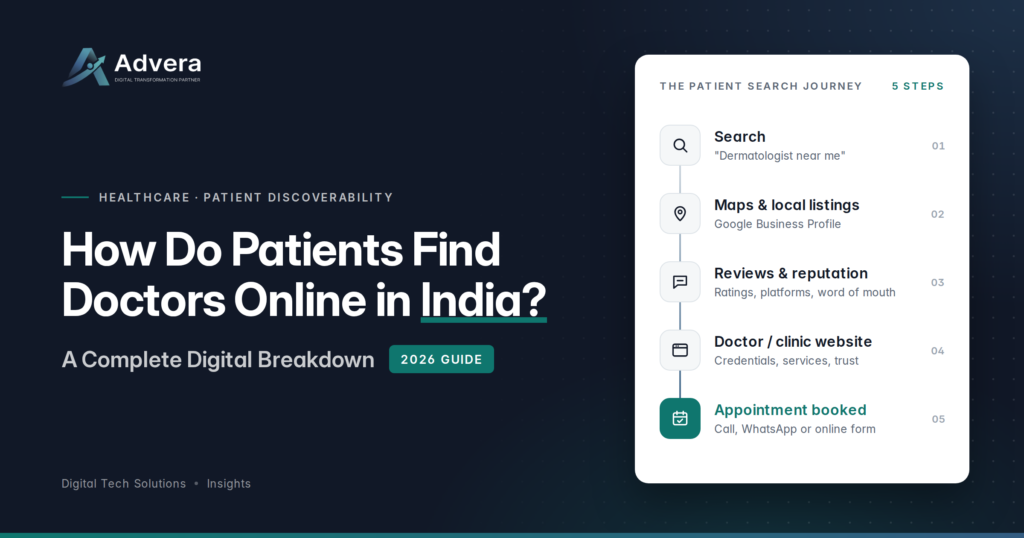
Before most patients in India walk into a clinic today, they have already looked the doctor up. They type "gynecologist in Jaipur" or "skin specialist near me", scroll through the reviews, open a website or two, and decide. If your clinic doesn't show up, or your profile looks like nobody has touched it since 2019, they quietly book with someone else.
That's why so many clinics are now spending on digital marketing for doctors in India. The trouble is that a lot of that money goes nowhere. We regularly speak to doctors who have paid for thousands of followers, months of ads or a pile of blog posts, and still can't point to a single new patient it brought in.
This guide is for those doctors. We'll go through what genuinely helps patients find and trust you, what is a waste of money, and, importantly, what the National Medical Commission's new advertising guidelines now allow.
First, the New NMC Rules (October 2026)
On 6 October 2026, the NMC's Ethics and Medical Registration Board issued guidelines on ethical advertising and public communication for doctors and hospitals. They came into force immediately, and they change what a sensible online plan looks like.
In short, doctors can still:
- Share factual information: your name, qualifications, specialty, clinic address, timings and consultation fees
- Educate the public about health, as long as it isn't a disguised pitch for your practice
- Be listed in a hospital's doctor directory with qualifications, registration and availability
What is no longer allowed, or carries real risk:
- Claims like "best doctor" or "guaranteed results", and success rates you can't verify
- Patient testimonials, before-and-after photos and promotional case stories, even with consent
- Using your own photograph to advertise yourself
- Buying or manipulating followers, likes, reviews or ratings
- Paying anyone a fee linked to patient leads or referrals
- Discounts, cashbacks or "free procedure" offers that push people into treatment
- AI-made promotional content; any AI-generated content must be labelled as such
The guidelines also cover sponsored and search-engine promotion and how doctors may work with third parties for marketing. So read the full notice, and if you're unsure about something, check with your State Medical Council or a legal adviser before you spend. Hospitals are judged slightly differently, under the Clinical Establishments Act and state laws, but the spirit is the same: inform, don't sell.
The good news? Almost everything that actually works was already informational. The rules mostly cut out the tactics that weren't working anyway.
What Actually Works
1. A Website That Answers Patients' Questions
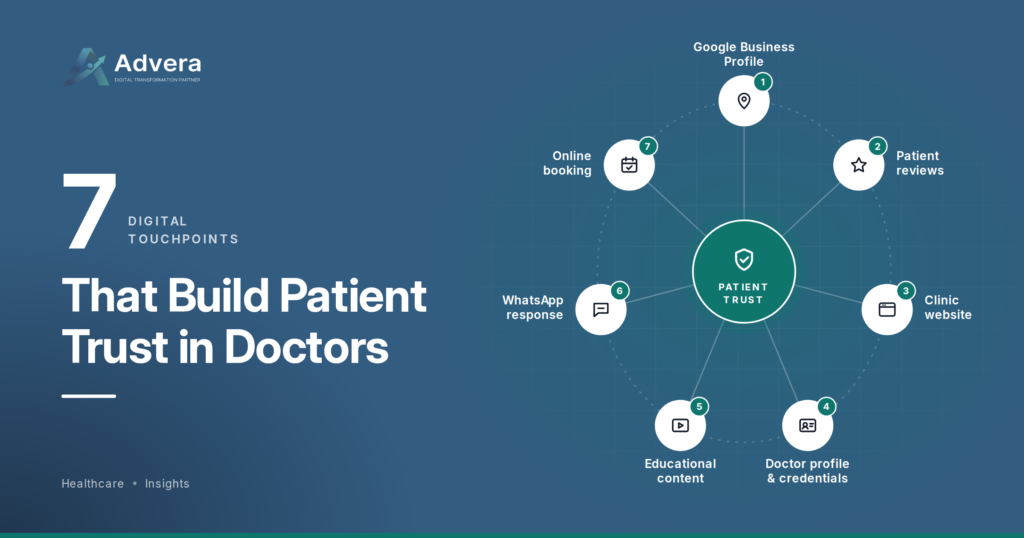
Your website is usually the first proper look a patient gets at you. Most of them arrive with two questions: who is this doctor, and can they help with my problem? Answer both within a few seconds and you've done most of the work.
A good clinic website covers:
- Each doctor's qualifications, registration and areas of focus
- The conditions you treat and the procedures you offer, explained in plain language
- Clinic address, map, timings and consultation fees
- What to expect on a first visit
- Common questions, answered honestly
- A clear way to book, call or message on WhatsApp
Check it on your own phone. Most of your patients will. If it loads slowly or the phone number is buried three taps deep, people leave.
2. Local SEO and Your Google Business Profile
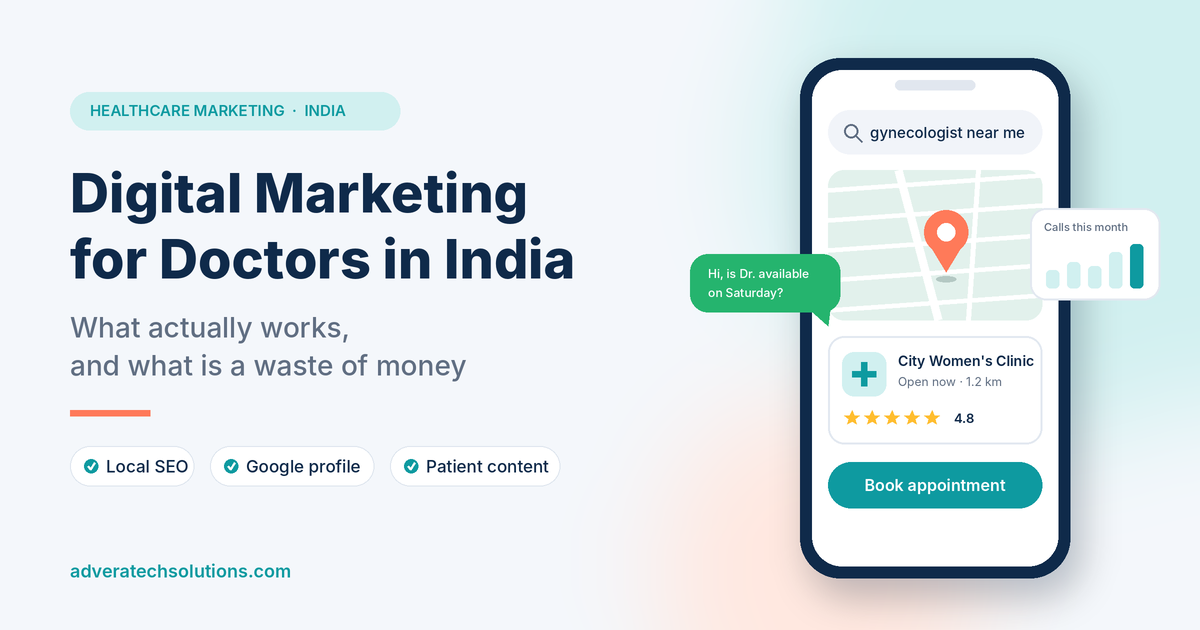
Most patients want a good doctor who is close by. When someone searches "dentist in Andheri" or "pediatrician near me", Google shows a map with a few clinics on it, and that small box gets a huge share of the clicks.
To show up there, keep your Google Business Profile complete and current: the right category, address, phone number, timings, website link and real photos of the clinic. Reply to reviews, good and bad, politely and without revealing anything about the patient. And make sure your clinic name, address and phone number are written exactly the same way on your website, your Google profile and every directory. Small differences confuse Google more than you'd think.
3. Correct Listings on Practo, Justdial and Other Directories
A lot of Indian patients search on Practo, Justdial, Lybrate or Google Maps rather than visiting clinic websites directly. Claim your listings, fill in every field and fix anything outdated, like an old address or a number that no longer works. Under the new guidelines, platforms must not sell paid rankings of doctors, so a complete and accurate profile matters more than ever.
4. Patient Education Content, in the Languages Your Patients Speak
The best clinic blogs answer the questions patients actually ask: "What are the early signs of diabetes?", "When should I see a cardiologist for chest pain?", "Is PCOS treatable?". Each good answer is another way for someone to find you, and it shows them how you explain things before they ever meet you.
A few things make a big difference:
- Write in Hindi, Tamil, Malayalam or whichever language your patients use, not just English
- Have every medical article checked by a qualified doctor before it goes live
- Keep it educational; the NMC rules don't allow awareness content that doubles as self-promotion
- Publish less, but better; ten genuinely useful articles beat a hundred thin ones
Google's own advice is to write for people, not search engines, and that matters even more for health topics.
5. Writing for AI Search and Answer Boxes (AEO and GEO)
People don't just type "migraine treatment" any more. They ask full questions, like "When should I see a doctor for a migraine?", and increasingly they ask Google's AI Overviews or ChatGPT instead of scrolling through results.
Answer engine optimization (AEO) means answering those questions clearly and directly on your pages. Generative engine optimization (GEO) means making your basic facts easy for AI tools to read and repeat: doctor name, specialty, qualifications, treatments, clinic address and the areas you serve. Short question-and-answer sections, consistent details across the web and simple language help with both.
6. Making It Easy to Book (WhatsApp Counts)
In India, plenty of patients would rather send a WhatsApp message than fill in a form or wait on hold. A click-to-WhatsApp button, a simple booking form and a phone number that someone actually answers will often do more for your appointments than another month of content. Just remember that patient conversations are confidential, so decide who in your team handles them and how.
7. Tracking What Happens After the Click
Visitors and rankings are only half the story. What you really want to know is how many calls, WhatsApp messages and booking requests came from your website and Google profile each month. Set up call and form tracking from day one, so you can see which efforts bring patients and which just bring traffic.
What Is a Waste of Money (and Some of It Now Breaks the Rules)
Buying Followers, Likes or Reviews
A big follower count looks nice, but bought followers don't book appointments. You end up with large numbers and no questions, no calls and no visits. Fake reviews are worse: patients can often spot them, and the NMC guidelines now prohibit buying or manipulating followers, likes, reviews and ratings outright. Ask happy patients to leave an honest review instead. It's slower, but it's real.
Chasing the Number One Spot on Google
Rankings move all the time. A competitor improves their site, Google updates its algorithm, results change by location. Obsessing over one keyword position is a quick way to spend a lot and feel bad about it. Watch the numbers that matter instead: calls, messages and booked appointments.
Mass-Produced AI Articles
AI can help with research and first drafts. But publishing dozens of generic, unchecked medical articles is risky. Mistakes in health content can genuinely hurt someone, readers notice when every article sounds the same, and the new guidelines require AI-generated content to be labelled. Use AI as an assistant, and let a person who knows the subject write and check the final piece.
Running Ads Without Tracking or Checking the Rules
Ads can bring visitors quickly, but clicks are not patients. If you get plenty of clicks and very few enquiries, look at the whole journey: the search terms, the ad itself, the page people land on and how easy it is to contact you.
There's a second question now too. The NMC guidelines treat sponsored and search-engine promotion as advertising, so check what's permitted for your situation before you run paid campaigns at all.
Discounts and "Free Consultation" Offers
Time-limited offers, cashbacks and free procedures used to be a common way to fill appointment slots. They tend to attract price shoppers rather than loyal patients, and offers that encourage unnecessary consultations or treatment are now restricted.
How Much Does Digital Marketing for Doctors in India Cost?
There's no single price, and anyone who quotes one before understanding your clinic is guessing. What drives the cost:
- Your specialty and city. A fertility clinic in Mumbai competes much harder online than a family physician in a smaller town.
- What you already have. Fixing an existing website costs far less than building one from scratch.
- How much content you need, and in how many languages.
- Ongoing work versus a one-time setup. Local SEO and content keep working only if someone keeps them up to date.
A fair agency will look at your current website and Google profile first, then tell you what's worth fixing and what isn't. Be wary of anyone who promises guaranteed rankings, or wants to charge you per patient or per lead. That kind of arrangement is now explicitly ruled out.
What a Sensible Plan Looks Like
Most clinics don't need everything at once. A practical order is:
- A fast, mobile-friendly website with accurate doctor and clinic information
- A complete Google Business Profile, and correct listings on Practo, Justdial and other directories
- Local SEO so you appear for searches in your area
- Simple booking through calls, forms and WhatsApp
- Tracking for calls, messages and appointment requests
- Regular patient education content, reviewed by a doctor
- Paid campaigns only if they're permitted for you, and only with tracking in place
What you add, and in what order, depends on your specialty, location, competition and the patients you want to reach.
FAQs
Is digital marketing allowed for doctors in India?
Yes, within limits. Under the NMC guidelines issued on 6 October 2026, doctors can share factual information about their practice and take part in genuine health education. Self-promotion, testimonials, unverifiable claims, fake reviews and payments linked to patient leads are not allowed. If you're unsure about a specific activity, check with your State Medical Council.
How much does digital marketing cost for a clinic in India?
It depends on your specialty, your city, the state of your current website and how much ongoing work you need. Ask for an audit of your existing online presence first. A good agency will show you where the real gaps are before quoting.
How long does SEO take to bring patients to a clinic?
Fixes to your Google Business Profile and listings can show results within a few weeks. Ranking for competitive searches usually takes several months of steady work. SEO is slower than ads, but it keeps working long after the effort is made.
Is Google Ads or SEO better for doctors?
SEO and a strong Google Business Profile build lasting visibility and suit the NMC's focus on factual information. Paid campaigns are treated as advertising under the new guidelines, so check what's permitted for you before relying on them.
Should doctors be on Instagram or YouTube?
They can be useful for genuine health education, such as explaining conditions, busting common myths or answering frequently asked questions. Avoid promotional posts, patient stories, before-and-after images and fear-based messaging, all of which are restricted.
How can my clinic get more Google reviews?
Ask satisfied patients to leave an honest review, for example with a link or QR code at the reception desk. Never buy reviews, offer anything in return or post reviews yourself; the NMC guidelines prohibit it.
Final Thoughts
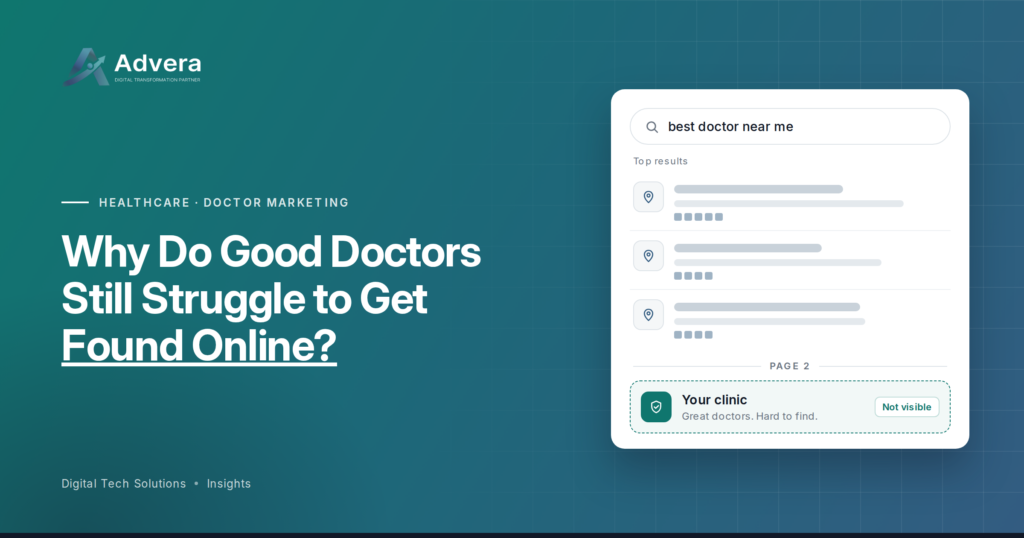
Good doctors often lose patients online for simple reasons: an outdated Google profile, a website that doesn't answer basic questions, or money spent on followers and ads that never turn into appointments. The new NMC rules make one thing clearer than ever. The digital marketing for doctors in India that lasts is honest, factual and genuinely useful to patients.
At Advera Tech Solutions, we work with clinics and hospitals on exactly that: medical SEO, local SEO, healthcare websites, patient education content, AEO and GEO, and proper tracking, all built around the new guidelines.
Not sure where your clinic stands? Book a free website and Google visibility check and we'll show you what's working, what isn't and what to fix first.